PAI Gateway OS
$49.00
PAI Gateway OS is the operating system image from the PAI Gateway, packaged for your own x86 mini PC with two or more Ethernet ports. It turns a standard dual-NIC computer into an inline privacy router between your broadband modem and your local network.
It is for people who want whole-house network encryption and local data sanitization using hardware they already own or choose themselves. You need an x86-64 machine with two Ethernet ports and 8 GB of memory or more. One port faces your modem, and the second port faces your home router.
Outbound connections pass through an encrypted WireGuard tunnel using transparent redirection. Outbound domain lookups are redirected to an encrypted DNS resolver using Oblivious DNS, preventing your internet service provider from recording your browsing habits. If the encrypted connection drops, traffic stops immediately to prevent unencrypted leaks.
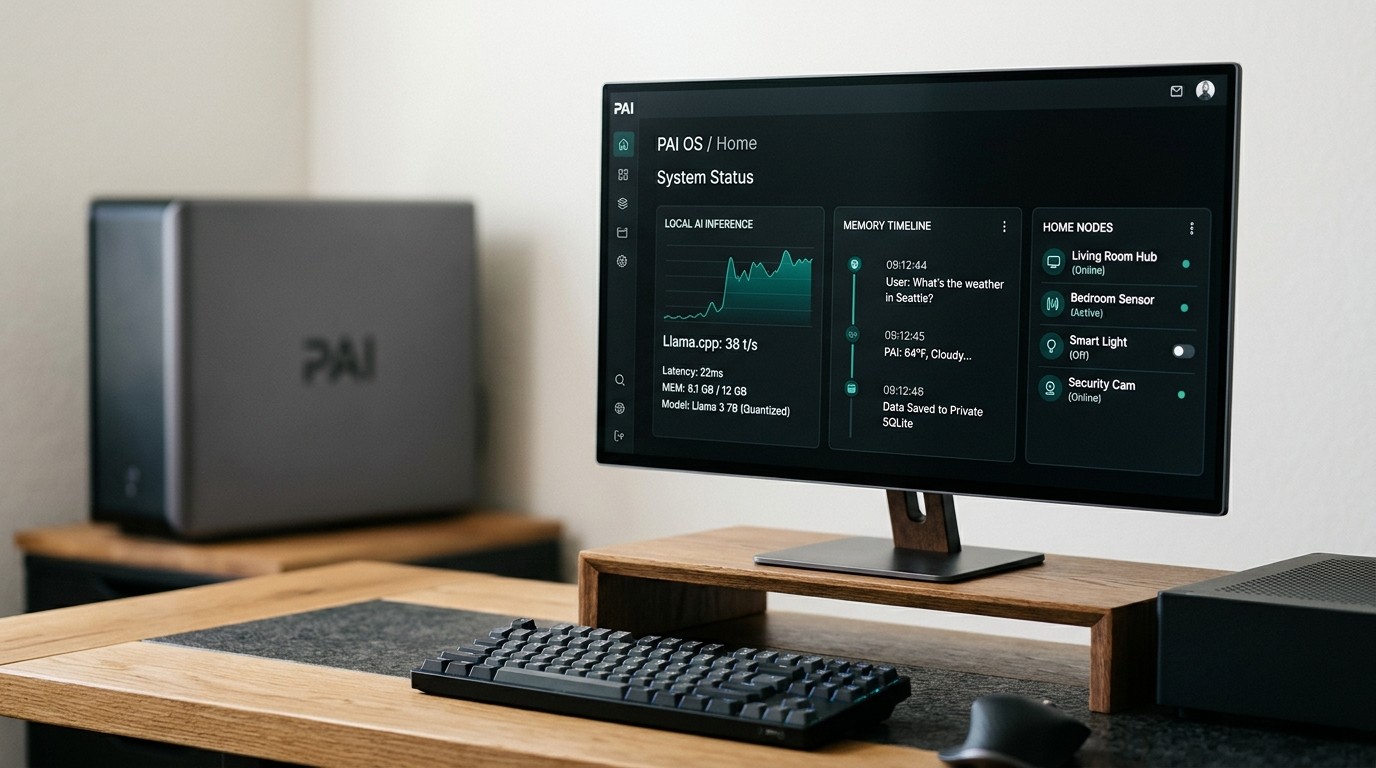
No PAI account holds your data, and telemetry is off by default. Your personal memory and the search index over your own files live in a SQLite file on the box. Remote access goes through a private overlay network, so nothing listens on public interfaces.
PAI Gateway OS includes the local PAI proxy bridge, allowing your local assistants to replace personal names and account numbers with tokens before external requests leave the house.
Updates are signed and planned as A/B system images designed to roll back automatically if an update fails. One year of software updates is included.
We have not measured speed, power or noise yet. We will publish measured numbers for each model and each upgrade stage after prototype testing. Which models fit on which memory size is an estimate until then.
Looks small. Lives large.
Five by five inches of sovereign AI compute. Precision CNC titanium unibody, NVIDIA-grade cellular acoustic mesh, and unified high-bandwidth silicon.
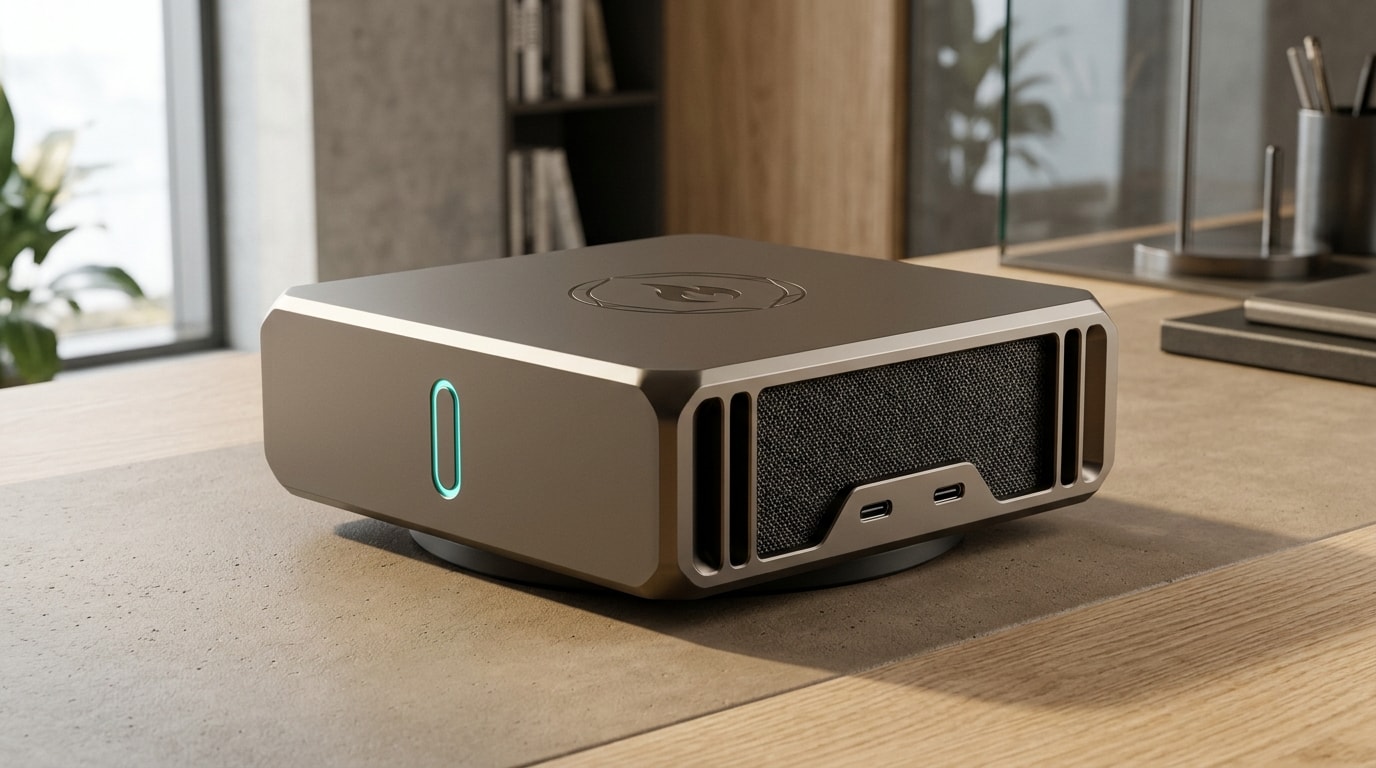
Bead-blasted champagne titanium unibody with 45° chamfers and elevated perimeter base.
Sovereignty from the inside out.
Engineered for continuous 24/7 autonomous agent execution. Zero noise at idle, ice-cold under continuous inference.
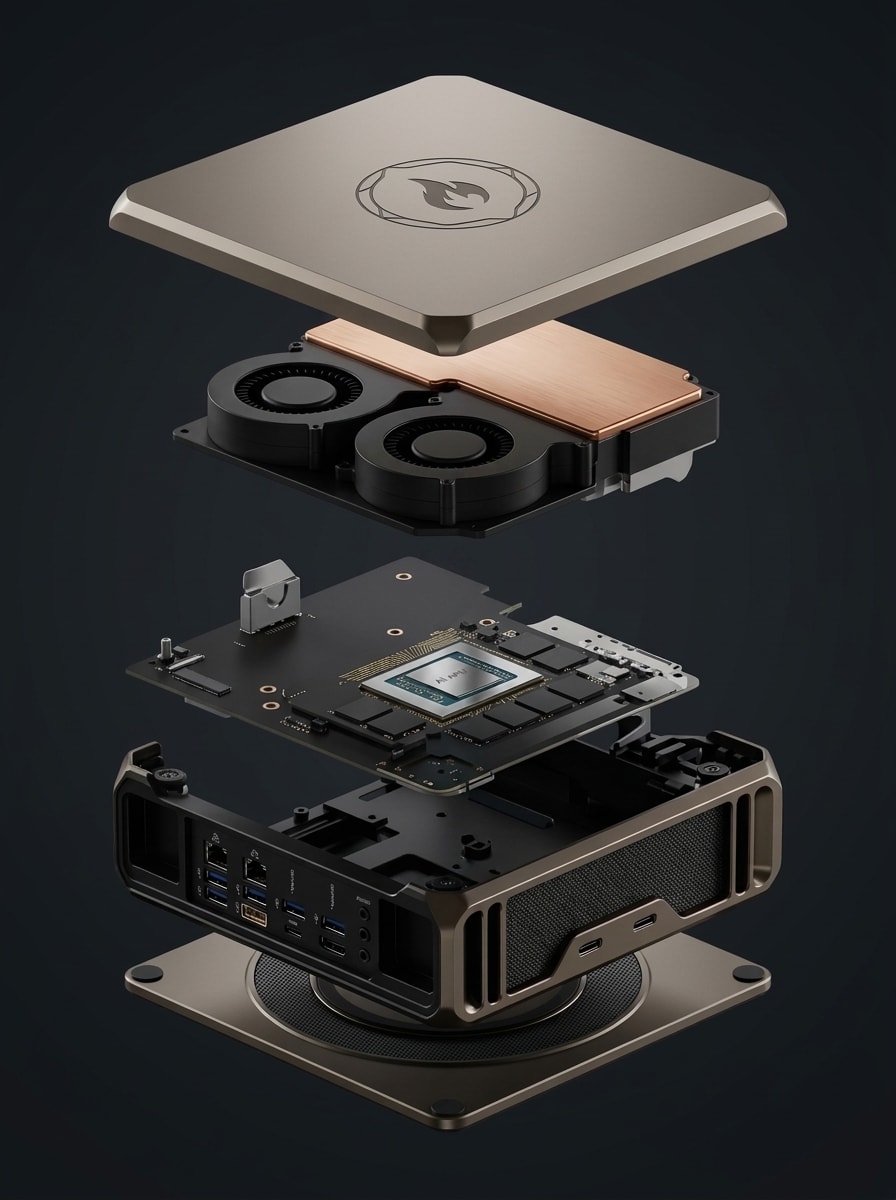
Titanium Monolith
Machined from a single block of aerospace-grade aluminum alloy with silky bead-blasted texture and diamond-cut 45° chamfers.
Dual Radial Blowers
Twin curved-blade radial fans pull fresh air across the 360° perimeter foot and channel it across the thermal core at near-zero dB.
Copper Vapor Chamber
Sintered copper vapor chamber contacts 100% of the unified silicon die, dissipating sustained 30W-50W workloads without throttling.
Shielded Sub-Frame
Isolates vibration and grounds heavy I/O lanes including rear OCuLink 64Gbps, dual 2.5GbE, dual Thunderbolt 4, and HDMI 2.1.
The Hearth Display Concept.
Exploring integrated top-mount OLED displays for the top two PAI models. Glanceable agentic workflows, real-time voice waveforms, and local touch control directly on the hardware.
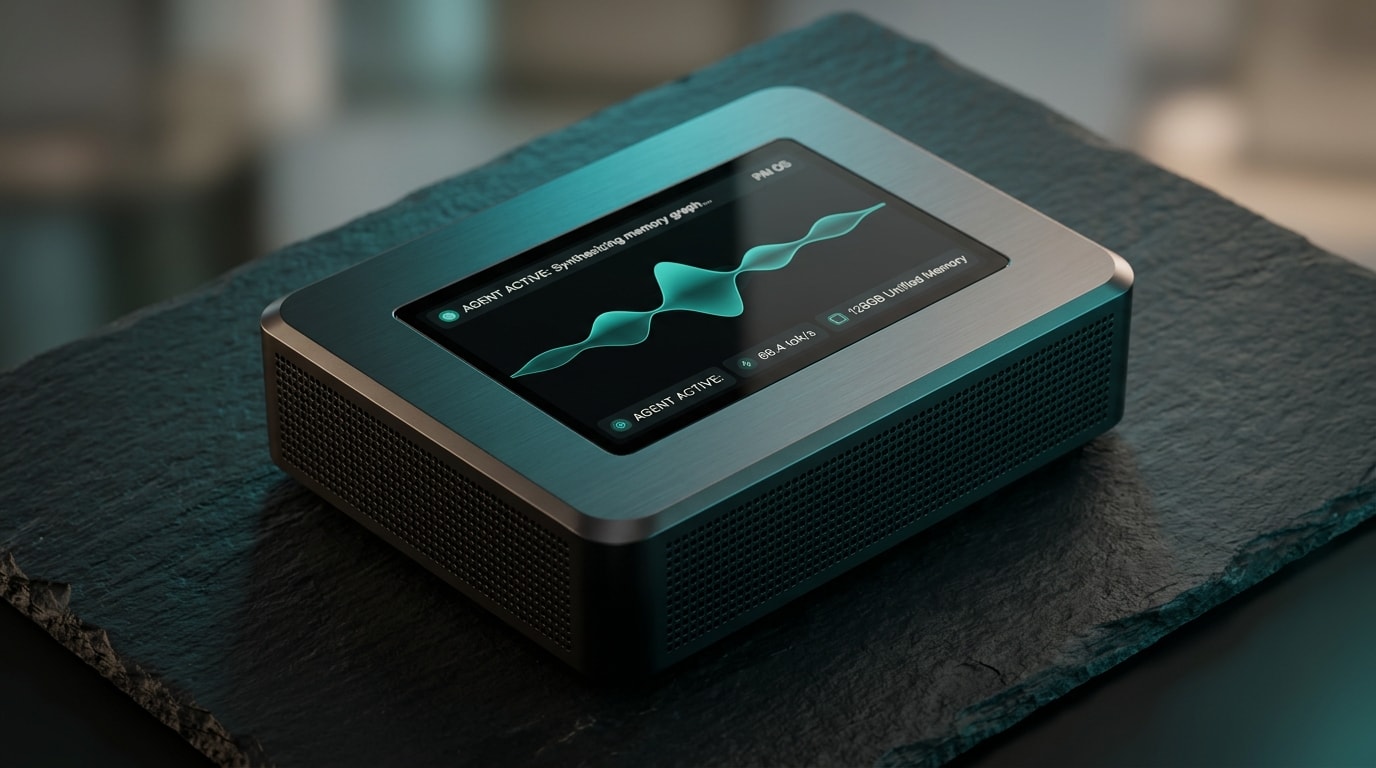
A panoramic top display integrated into the obsidian-black chassis. Visualizes live token velocities, neural memory graphs, and parallel sub-agent workflows.
Edge-to-Edge Rectangular AMOLED HUD Deck
Live Agentic Orchestration
Follow multi-step autonomous agent tasks in real-time: research synthesis, database queries, and code builds.
Real-Time Neural Telemetry
Monitors unified 128GB memory bandwidth, token generation velocity (tok/s), and active KV-cache headroom.
Standalone Voice & Touch Hub
Operate your Sovereign Hearth directly without needing an external studio monitor or waking your laptop.
Specs
- Requires
- x86-64 computer with dual Ethernet ports, 8 GB RAM minimum
- Role
- Inline privacy router and DNS protector
- Network Engine
- Transparent WireGuard tunnel with fail-closed kill switch
- DNS Shield
- DNS interception with Oblivious DNS over HTTPS
- Data Proxy
- Local PII tokenization bridge for outbound AI calls
- Updates
- 1 year of signed A/B system updates
Measured numbers coming after prototype testing